
Last Updated: October 25, 2026
Quick Summary
To buy high quality wood scent candles, look for a clear scent profile, named materials, useful wick and vessel information, realistic presence guidance, qualified burn-time estimates, care instructions, and evidence behind performance claims. A listing helps you judge the information; the burn itself must be assessed in use.
- Soy, coconut blends and paraffin all burn, so wax type alone does not settle quality.
- A good description names character, like cedarwood with a dry, pencil-shaving edge.
- Candle scent strength depends on wax, wick, fragrance load and room conditions together.
- Presence labels like INTIMATE, AMBIENT and EXPANSIVE describe intended experience, not guaranteed room size.
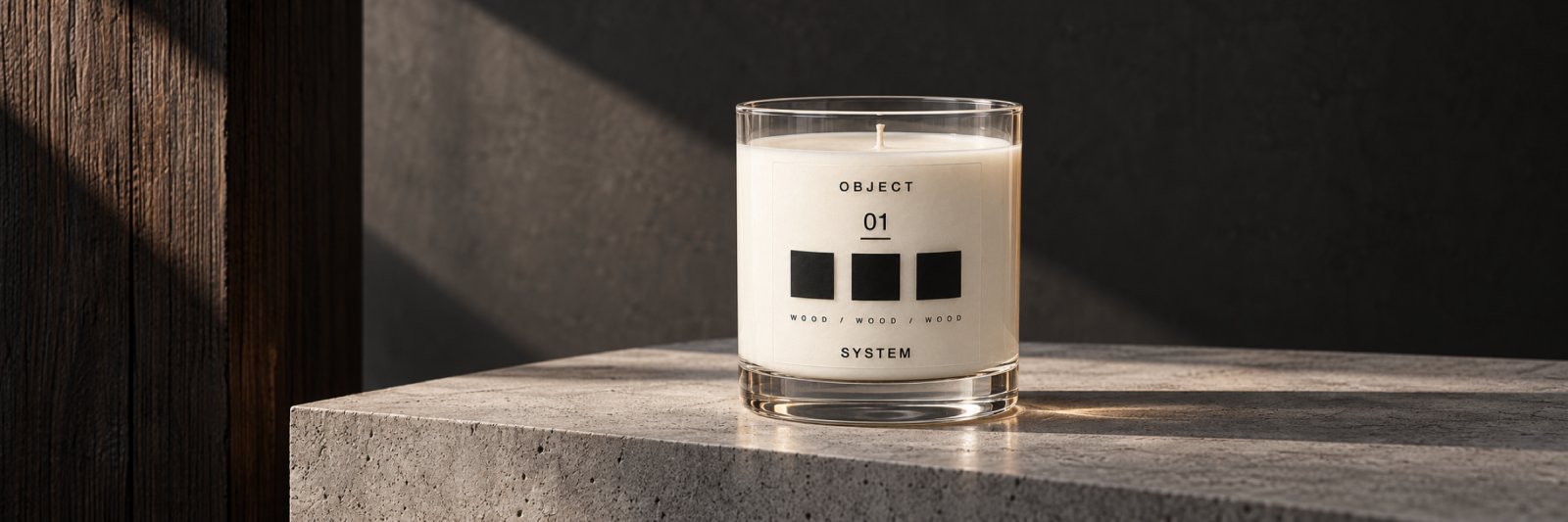
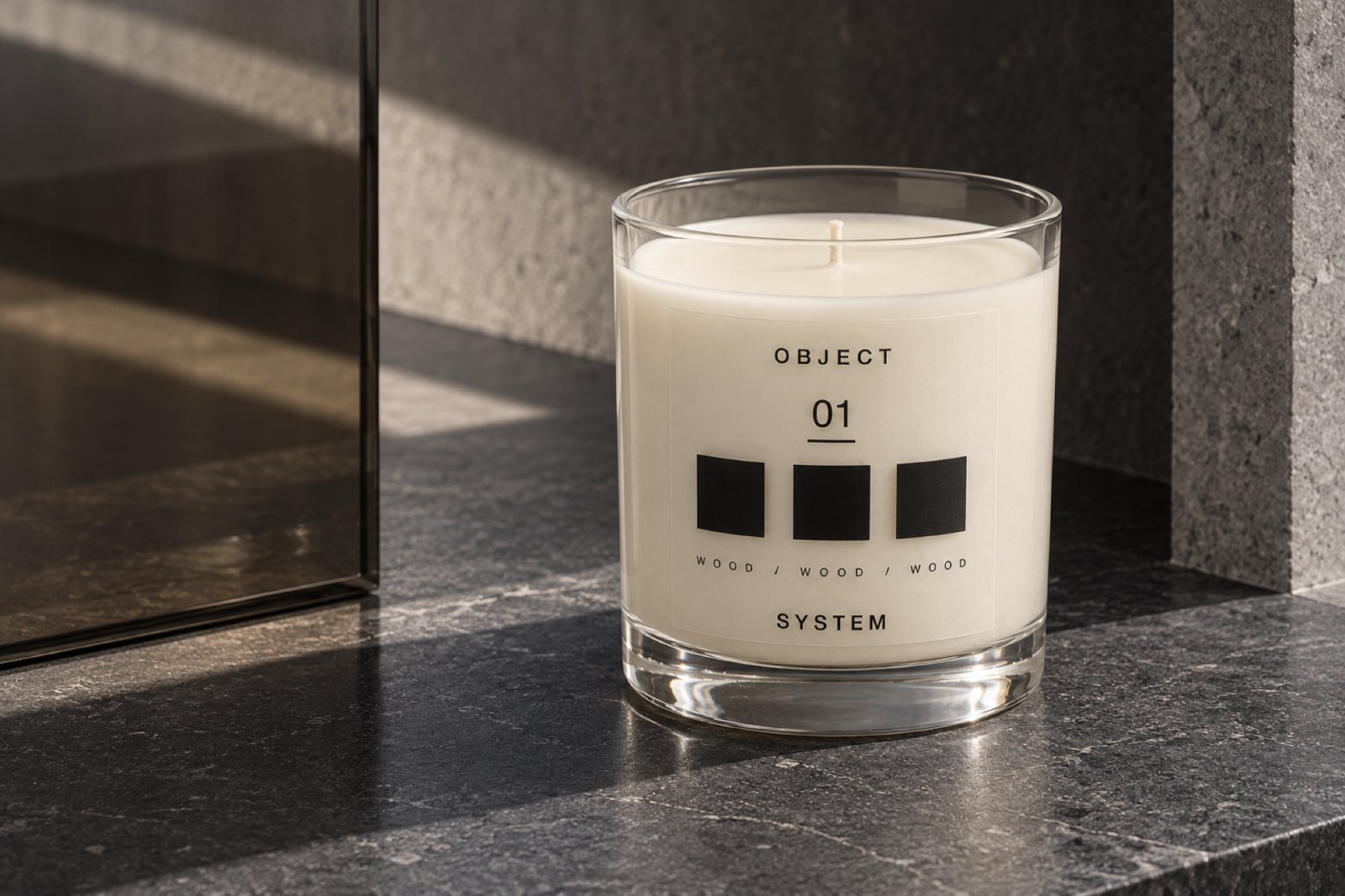
- Composition 01 is a dry wood candle with pencil shavings and resin and an EXPANSIVE presence.
Table of Contents
- How to Choose a Scented Candle: Start With the Wood Profile
- How to Tell If a Candle Is Good Quality Before You Buy
- Candle Ingredient Transparency and Candle Scent Strength
- Frequently Asked Questions
How to Choose a Scented Candle: Start With the Wood Profile
Start with the wood character you enjoy. Wood scent candles can feel dry and sharp, creamy and soft, or resinous and dark. Sweetness or smoke can be part of that profile; neither automatically makes a candle better or worse. The useful question is whether the description tells you which direction to expect.
OBJECT / SYSTEM organizes its candles through WOOD, FLORAL and AIR, with exactly three element symbols per composition. Count the symbols; do not read their sequence. Repetition describes perceived emphasis, not formula percentages. Composition 01 is a dry wood candle with pencil shavings and resin and an EXPANSIVE presence. If you want the wood without smoke or sweetness, compare the dry woody options or see the full record for composition 01.
Close-up of a person's hands holding a lit wood-scented candle in a dark amber glass jar on a wooden side table, warm evening lamplight, a linen sofa blurred behind
How to Tell If a Candle Is Good Quality Before You Buy
Before buying, you can assess how clearly a maker explains the candle. You cannot confirm an even burn, scent strength or suitability for your room from the listing alone. The glossary defines terms like scent throw and diffusion so you can evaluate quality claims accurately. Start with the wax: soy, coconut blends and paraffin all burn, so the wax name alone is not a quality ranking. Wick selection needs to suit the complete wax, fragrance and vessel combination; diameter alone cannot establish it. A description such as "cedarwood with a dry, pencil-shaving edge" gives you more to compare than a mood alone.
Use these seven signs to compare the information before buying. They help you make a considered choice; they do not replace observing the candle during use.
What to check | What useful information looks like |
|---|---|
1. Named wax materials | The wax or blend is disclosed; no wax name alone proves quality. |
2. Wick and vessel details | Wick material and vessel size are stated; suitability requires burn testing. |
3. A specific wood profile | Dry, creamy, resinous or smoky character you can compare. |
4. Realistic presence guidance | Intended presence with room and airflow qualifications. |
5. Qualified burn-time estimates | An estimate with conditions and a clear evidence status. |
6. Useful care instructions | Wick trimming, maximum burn duration and stop-use guidance. |
7. Evidence behind claims | A testing method or supportable observations, with limits stated. |
Candle Ingredient Transparency and Candle Scent Strength
Candle ingredient transparency means the maker documents what the candle is made of, by function, rather than listing a mood. Candle scent strength depends on wax, wick, fragrance load and room conditions together, not on one number. The same candle may register differently in a small den and an open-plan living room. Presence labels like INTIMATE, AMBIENT and EXPANSIVE describe intended experience, not a guaranteed room size or performance score. If a candle you own smells like nothing, the common causes and fixes for weak scent throw are worth checking.
When you buy high quality wood scent candles online, specific information is more useful than a promise of intensity. Compare the scent profile, materials, care guidance and evidence, then consider the room. Start with composition 01 if you prefer dry wood, pencil shavings and resin with EXPANSIVE presence. Presence is a relative guide, so your space and burn conditions still matter.
Frequently Asked Questions
What should I look for when buying wood scent candles?
Look for seven things: a specific wood profile, named wax materials, wick and vessel details, realistic presence guidance, qualified burn-time estimates, care instructions, and evidence behind performance claims. Clear information helps you compare candles before buying; it cannot guarantee an even burn or a particular scent strength in your room.
How can I tell if a candle is good quality before it arrives?
You can judge the quality of the information before the candle arrives. Look for named materials, clear product photographs, useful care guidance and claims that explain their evidence and limits. Actual burn behavior and scent perception still need to be assessed in use, following the manufacturer’s instructions.
Are wood-scented candles made with real wood?
A wood scent describes a fragrance impression; it does not by itself tell you which ingredients are present. Woody fragrance can use botanical materials, synthetic aroma materials, or a combination. A wooden wick is a separate construction choice. OBJECT / SYSTEM Composition 01 uses CEDAR EO, Cashermon, Cedryl Methyl Ether, Iso Super E to get its wood like notes.
