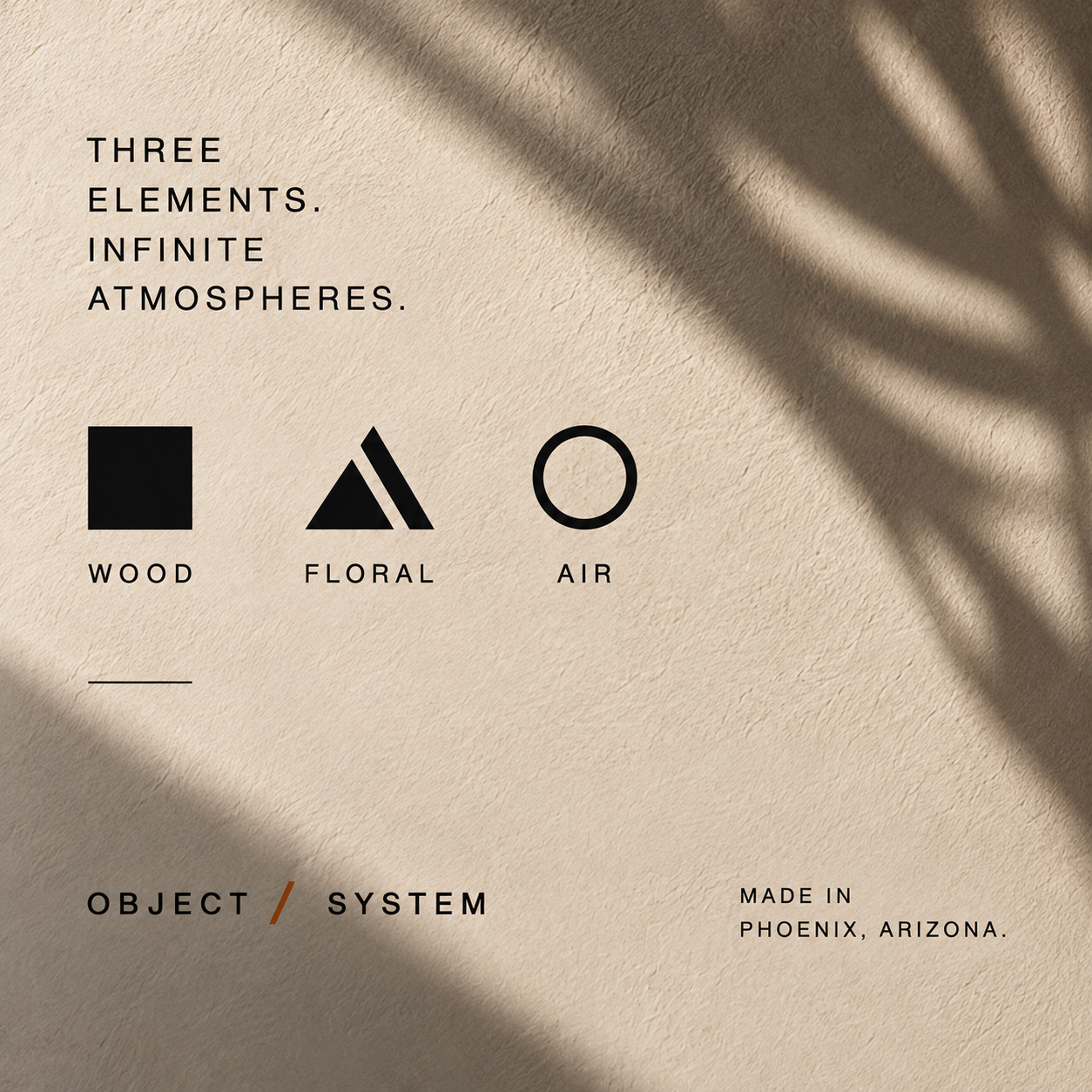
ELEMENT
Three elements.
A shared language.
WOOD, FLORAL and AIR translate the symbols. They describe how a composition is perceived—not a literal ingredient formula.
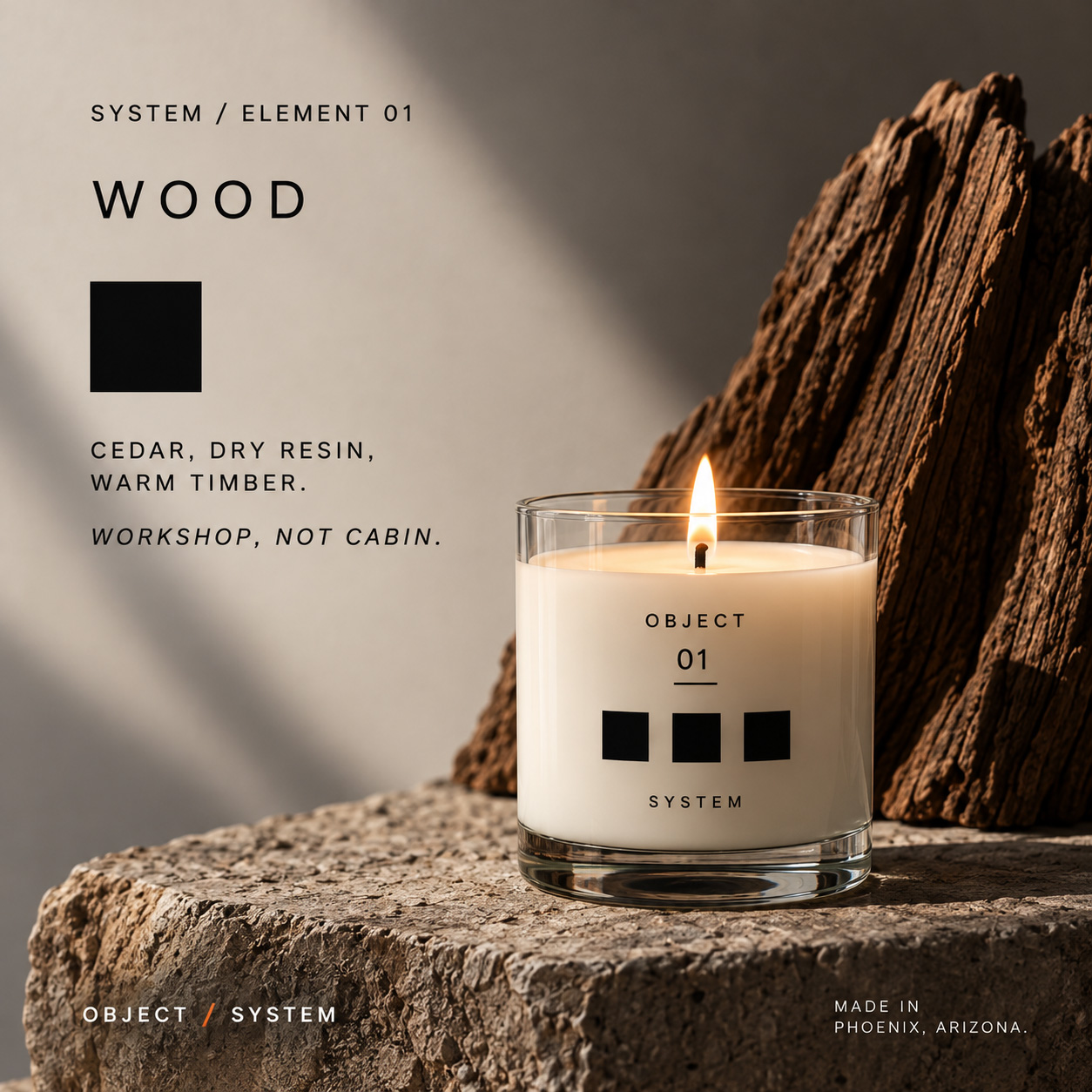
WOOD
Dry, structural, resinous.
WOOD describes grain, pencil shavings and resin. It gives a composition its dry, structural character.
Workshop, not cabin.
Composition 01 establishes WOOD. Its three repeated symbols describe a single elemental identity, not three ingredients.
Explore WOOD materials →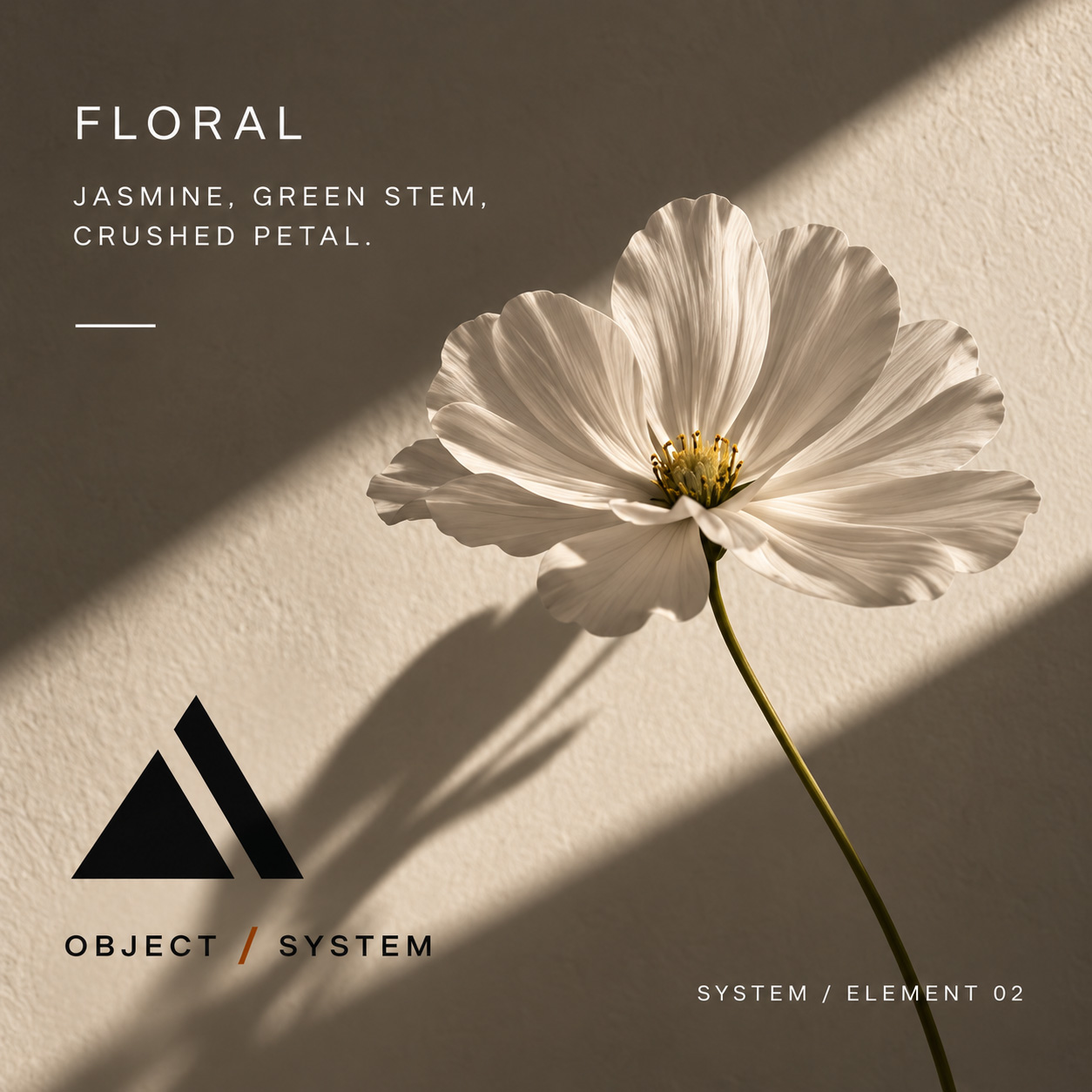
FLORAL
Soft, botanical, lifted.
FLORAL describes petal, green stem and botanical lift. It does not require sweetness or the weight of a bouquet.
Stem, not bouquet.
Composition 02 establishes FLORAL. Its three repeated symbols describe a single elemental identity, not three ingredients.
Explore FLORAL materials →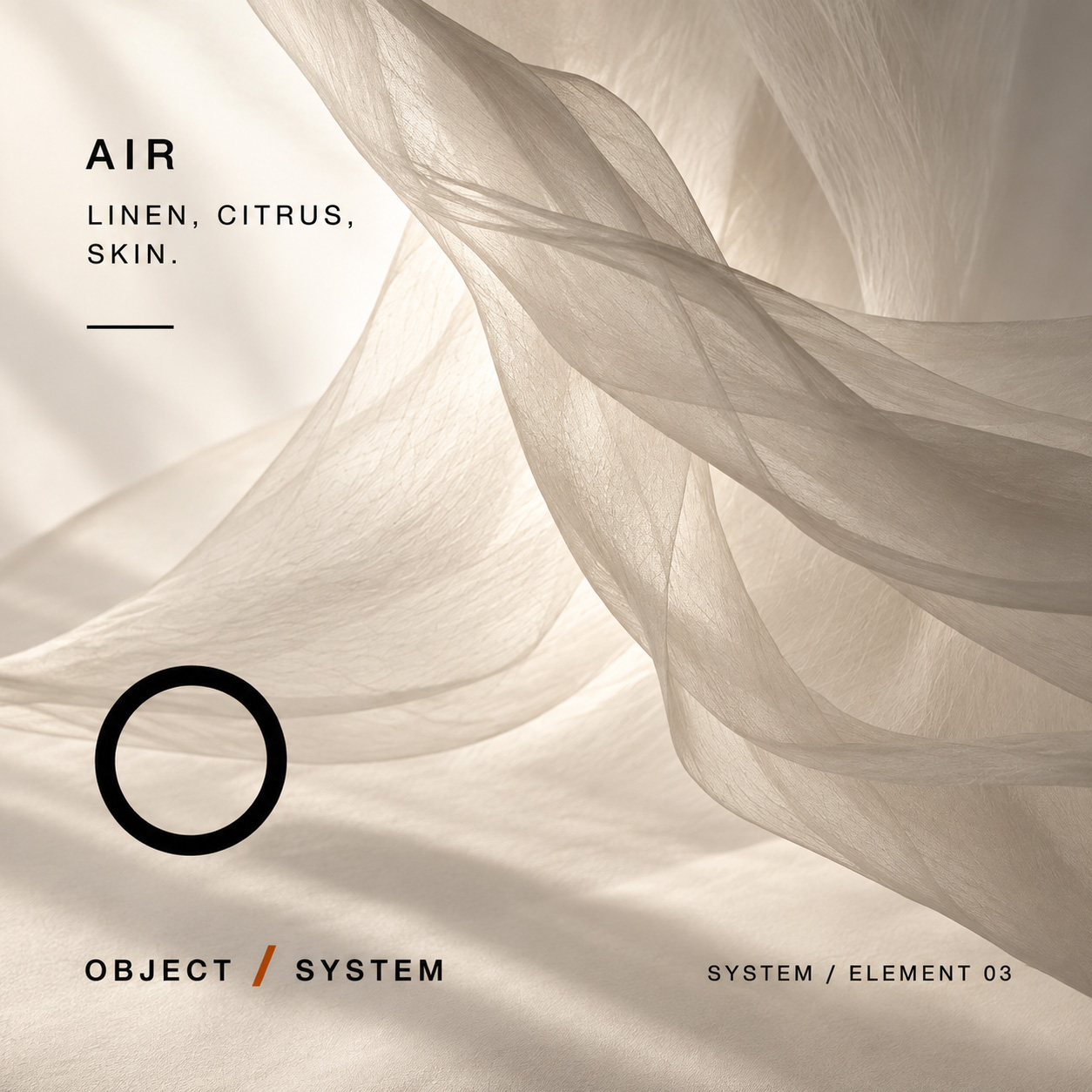
AIR
Open, transparent, volatile.
AIR describes openness, lift and space. It can read as linen, citrus or skin without becoming a beach or aquatic story.
Gallery, not beach.
Composition 03 establishes AIR. Its three repeated symbols describe a single elemental identity, not three ingredients.
Explore AIR materials →Read the relationship
Every composition uses exactly three symbols. Count them; do not read their sequence. Repetition describes perceived emphasis, not formula percentages.
01–03 establish the elements. 04 combines WOOD and AIR; 05 combines FLORAL and AIR; 06 brings all three together.
Presence is separate: INTIMATE, AMBIENT and EXPANSIVE describe how the scent occupies a room.
Explore proportion and presence →