
Table of Contents
- What Is Structured Home Fragrance?
- How to Choose Home Fragrance Without Guessing
- Candles vs. Diffusers: Which Format Fits Your Space?
- How to Make Home Fragrance Last Longer
- Where Structured Home Fragrance Falls Short
- Six Compositions, Three Elements
- Frequently Asked Questions
- Is structured home fragrance better than traditional fragrance?
- What does structured home fragrance mean?
- How do I choose home fragrance for each room?
- Are candles or diffusers better for home fragrance?
- Can fragrance notes tell me how strong a candle will be?
- Does a larger room require a stronger fragrance?
- Start With a Direction
- Frequently Asked Questions
Last Updated: October 19, 2026
Is Structured Home Fragrance Better? A 2026 Guide
Choosing home fragrance should be fairly simple. You smell something, you like it, you bring it home.
But buying fragrance online removes the most useful part of that process. You can't smell it.
Instead, you're given a name, a list of notes, and a description of how the fragrance is supposed to make you feel.
Sometimes that's enough. Often, it isn't.
Structured home fragrance offers another way to make the decision. Rather than relying on a name or an imagined setting, it describes how a scent is composed, which directions are most recognizable, and how much presence it is intended to have in a room.
So, is structured home fragrance better?
It can be a more useful way to choose and compare scents, particularly when shopping online. But it doesn't replace personal preference.
The idea is to give you something meaningful to go on before you've smelled it.
What Is Structured Home Fragrance?
Structured home fragrance uses a consistent classification system to describe and compare scents.
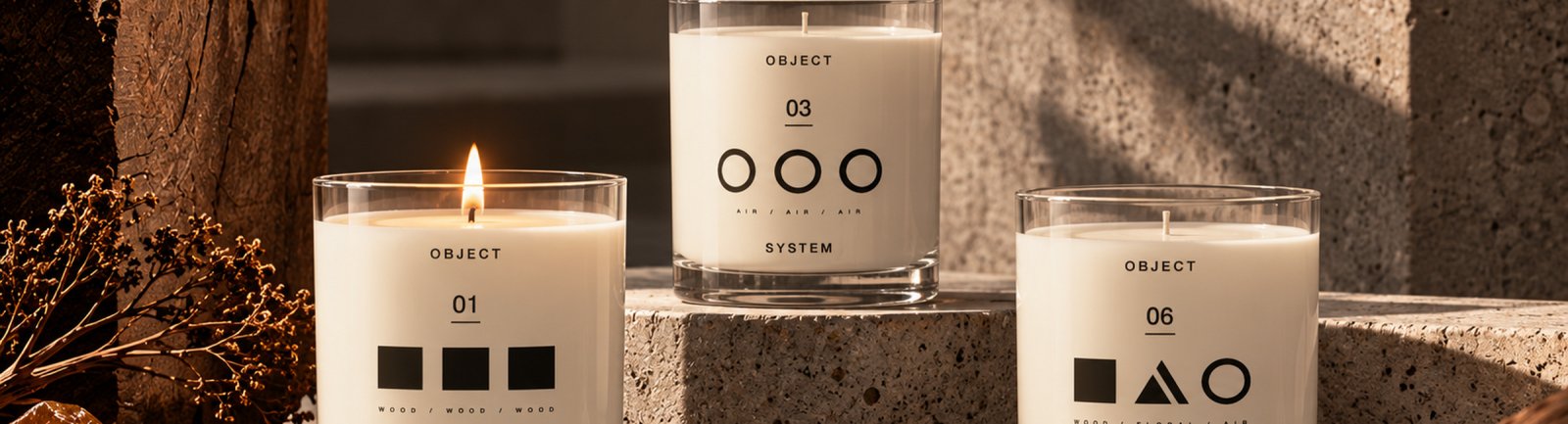
At OBJECT / SYSTEM, every composition is organized around three elements:
WOOD — Dry, structural, resinous.
FLORAL — Botanical, soft, lifted.
AIR — Open, transparent, volatile.
These aren't necessarily ingredient lists. They're descriptions of how a fragrance is perceived.
A scent classified as WOOD might suggest pencil shavings, cedar, or dry timber without necessarily containing those exact materials.
The same distinction applies to FLORAL and AIR.
Each composition uses exactly three element symbols. The number of each symbol communicates the relative character of the scent, not a chemical formula or ingredient percentage.
For example, 01 uses three WOOD symbols. It is the most direct expression of that element in the current collection.
06 combines WOOD, FLORAL, and AIR. Its identity comes from the relationship among all three.
The symbols describe the composition. The number identifies it.
This creates a common language for comparing fragrances without pretending that scent is entirely objective.
How to Choose Home Fragrance Without Guessing
A good place to start is with three questions.
1. What kind of scent do you actually like?
Forget about the room for a moment.
Think about the smells you naturally gravitate toward.
Dry wood. Green stems. Fresh linen. Citrus peel. Flowers. Warm materials.
Look for the underlying direction instead of getting caught up in a product name.
You may like something described as a garden without particularly enjoying floral fragrance. You may prefer woody scents without wanting your home to smell like a forest.
The distinction matters.
In OBJECT / SYSTEM, WOOD, FLORAL, and AIR provide a starting point. Individual compositions develop those directions in different ways.
2. How noticeable do you want it to be?
A fragrance doesn't need to fill every corner of a room to have an effect.
Sometimes you want to notice it when you walk through the door. Other times, you want something that stays closer to where it's being used.
OBJECT / SYSTEM classifies presence in three ways:
INTIMATE — A more contained scent experience.
AMBIENT — Scent that becomes part of the room without necessarily becoming its focus.
EXPANSIVE — A more outward-reaching scent presence.
These describe intended fragrance presence, not guaranteed distances or universal intensity measurements.
Actual experience depends on the composition, the space, air movement, and individual perception.
3. Where will you use it?
A small enclosed bedroom and a large open living area won't necessarily respond to the same candle in the same way.
Room volume matters. So do ceiling height, ventilation, open doors, air conditioning, and where the fragrance is placed.
A composition that feels noticeable in one room may register more subtly in another.
Start with the scent direction you like, consider your preferred level of presence, and then think about the room.
That's a more useful sequence than buying something simply because its name sounds appropriate for your home.
Candles vs. Diffusers: Which Format Fits Your Space?
Candles and diffusers introduce fragrance differently. Neither is automatically better.
The right choice depends on whether you want an intentional period of fragrance or something more continuous.
Candles: scent when you want it
A candle lets you choose when fragrance is introduced.
You light it when you're using a space and extinguish it when you're finished, following the manufacturer's burn and safety instructions.
There's also a physical aspect to a candle. The vessel, wax, and flame become part of the room.
The trade-off is that candles require attention. A burning candle must never be left unattended, and it should be kept away from drafts, combustible materials, children, and pets.
A good place to start is with three questions.
1. What kind of scent do you actually like?
Forget about the room for a moment.
Think about the smells you naturally gravitate toward.
Dry wood. Green stems. Fresh linen. Citrus peel. Flowers. Warm materials.
Look for the underlying direction instead of getting caught up in a product name.
You may like something described as a garden without particularly enjoying floral fragrance. You may prefer woody scents without wanting your home to smell like a forest.
The distinction matters.
In OBJECT / SYSTEM, WOOD, FLORAL, and AIR provide a starting point. Individual compositions develop those directions in different ways.
2. How noticeable do you want it to be?
A fragrance doesn't need to fill every corner of a room to have an effect.
Sometimes you want to notice it when you walk through the door. Other times, you want something that stays closer to where it's being used.
OBJECT / SYSTEM classifies presence in three ways:
INTIMATE — A more contained scent experience.
AMBIENT — Scent that becomes part of the room without necessarily becoming its focus.
EXPANSIVE — A more outward-reaching scent presence.
These describe intended fragrance presence, not guaranteed distances or universal intensity measurements.
Actual experience depends on the composition, the space, air movement, and individual perception.
3. Where will you use it?
A small enclosed bedroom and a large open living area won't necessarily respond to the same candle in the same way.
Room volume matters. So do ceiling height, ventilation, open doors, air conditioning, and where the fragrance is placed.
A composition that feels noticeable in one room may register more subtly in another.
Start with the scent direction you like, consider your preferred level of presence, and then think about the room.
That's a more useful sequence than buying something simply because its name sounds appropriate for your home.
Reed diffusers: continuous fragrance
Reed diffusers release fragrance gradually without an open flame.
They're useful when you want scent to remain present without lighting something each time.
The output can vary with the fragrance formulation, reeds, room temperature, and placement. As liquid evaporates, performance may change.
Reed diffusers still require careful handling and appropriate placement.
Electric diffusers: adjustable use
Electric diffusers come in different forms, including ultrasonic and other fragrance-dispersal systems.
Depending on the device, you may be able to adjust operating time or output.
Follow the manufacturer's instructions and use only compatible fragrance materials.
The distinction is straightforward: candles provide fragrance during a chosen period of use; diffusers are designed for more continuous or automated fragrance.
How to Make Home Fragrance Last Longer
Good fragrance use has less to do with buying the strongest product and more to do with using the format properly.
For candles, a few habits matter:
- Trim the wick as directed. An excessively long wick can contribute to soot and an unstable flame.
- Follow the recommended burn duration. Avoid burning beyond the manufacturer's instructions.
- Keep candles away from drafts. Moving air can disturb the flame and contribute to uneven burning.
- Store candles properly. Keep them away from excessive heat and direct sunlight.
- Pay attention to scent adaptation. A fragrance can become less noticeable after you've been around it for a while, even when the source is still present.
One important distinction: burning a candle longer does not automatically make it perform better.
And a fragrance becoming less noticeable to you doesn't prove it has stopped releasing scent.
Using fragrance correctly is more useful than assuming greater intensity always means better performance.
Where Structured Home Fragrance Falls Short
A classification system can't tell you everything.
Two people can smell the same composition and describe it differently.
One might notice its woody quality first. Another might recognize a softer, warmer aspect.
Personal associations also matter. Smell is closely connected to memory and experience, and no symbol can capture all of that.
A classification may help you narrow your choices. It cannot guarantee that you'll like the result.
Nor can it predict exactly how a particular fragrance will register in every room.
There is also something enjoyable about choosing fragrance without analyzing it. Some people prefer discovering a scent through its name, packaging, or a spontaneous experience in a shop.
That isn't a problem the system needs to solve.
The purpose of structure is to make comparison easier, not to remove curiosity.
Six Compositions, Three Elements
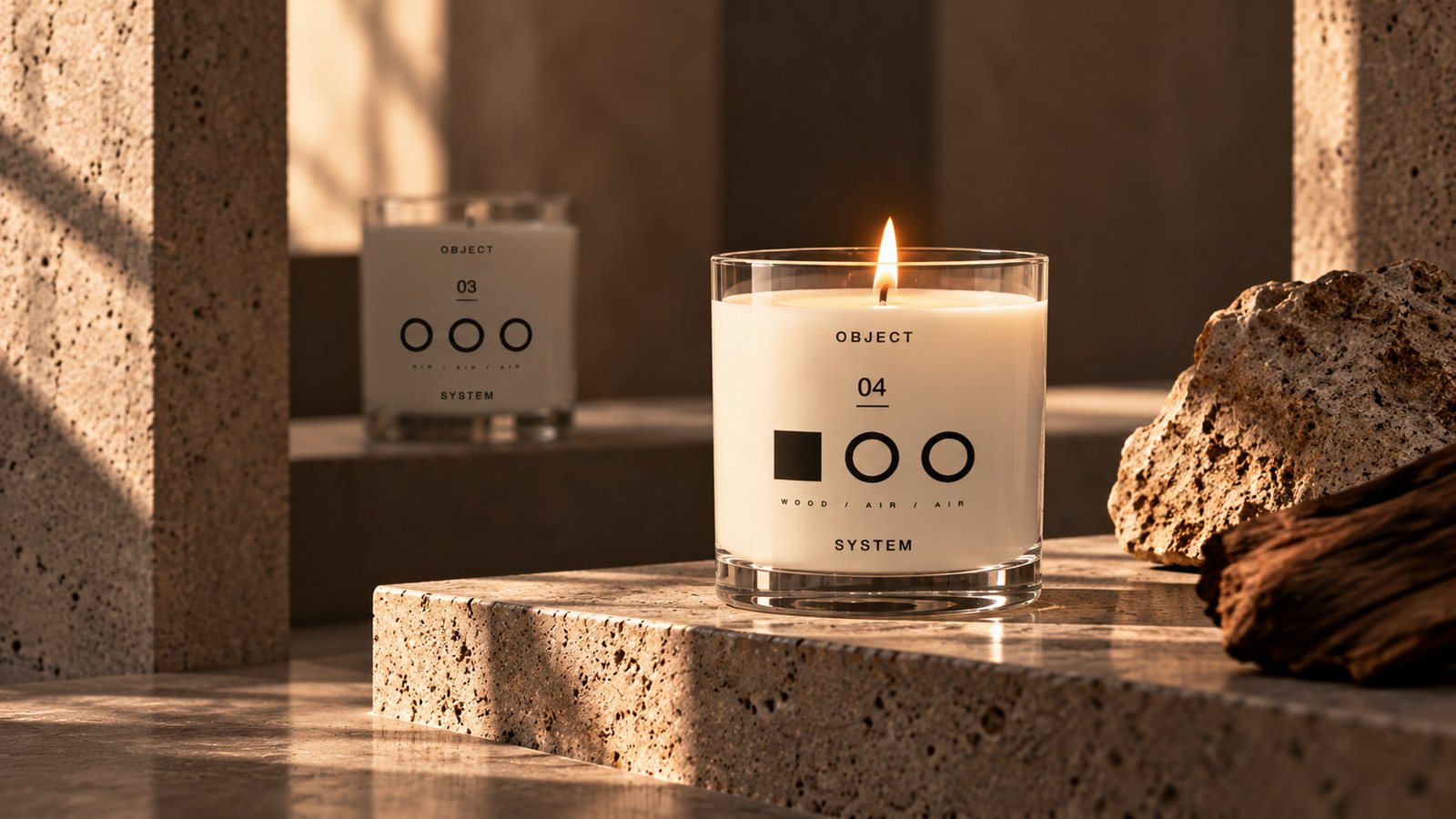
OBJECT / SYSTEM currently organizes its home fragrance collection into six compositions.
Composition | Elements | Presence |
|---|---|---|
01 | WOOD / WOOD / WOOD | EXPANSIVE |
02 | FLORAL / FLORAL / FLORAL | EXPANSIVE |
03 | AIR / AIR / AIR | AMBIENT |
04 | WOOD / AIR / AIR | INTIMATE |
05 | FLORAL / AIR / AIR | AMBIENT |
06 | WOOD / FLORAL / AIR | AMBIENT |
01, 02, and 03 establish the individual elements.
04, 05, and 06 explore their relationships.
Each composition has its own scent identity, but all six can be understood through the same framework.
Someone drawn to dry wood might begin with 01. Someone who prefers a softer floral direction might consider 05 rather than the greener, more open character of 02.
03 is a starting point for someone interested in the AIR direction. 04 approaches that element differently, pairing it with WOOD and a more intimate presence.
06 brings all three elements together.
You don't need to memorize the system. It's there to help you find a direction and compare your options.
Frequently Asked Questions
Is structured home fragrance better than traditional fragrance?
Not necessarily. Structured home fragrance provides a more consistent way to understand and compare scents, especially when buying online. Traditional fragrance descriptions can be equally useful for people who prefer to choose through notes, stories, or personal associations. The advantage of a structured system is clarity, not guaranteed superiority.
What does structured home fragrance mean?
Structured home fragrance describes scents through a consistent set of classifications rather than relying entirely on names or narratives. OBJECT / SYSTEM uses three elements, their perceived proportions, and intended presence to make compositions easier to understand and compare.
How do I choose home fragrance for each room?
Start with the scent direction you like and how noticeable you want it to be. Then consider the room's size, layout, ventilation, and how you use the space. Avoid assuming that a specific scent family belongs in a particular room.
Are candles or diffusers better for home fragrance?
Candles are useful when you want to choose when fragrance is introduced. Diffusers suit people who prefer more continuous or automated fragrance. The better choice depends on your routine, environment, and safety considerations.
Can fragrance notes tell me how strong a candle will be?
Not reliably. Notes describe aspects of a fragrance, not necessarily how far it will travel or how noticeable it will be in a particular room. Performance depends on the complete product and its environment.
Does a larger room require a stronger fragrance?
Not always. Larger spaces can change how fragrance is perceived, but airflow, layout, ventilation, and personal preference also matter. A more expansive fragrance may be a useful starting point if you want scent to register across a larger area, but no classification guarantees a specific coverage distance.
Start With a Direction
You don't need to become an expert in fragrance to choose something for your home.
You need enough information to make a considered decision.
Start with what you enjoy smelling. Understand the composition. Think about how much presence you want. Consider the room.
The rest is experience.
Explore the six compositions of OBJECT / SYSTEM and find a direction that works for you.
Frequently Asked Questions
Is structured home fragrance better than traditional fragrance?
Not necessarily. Structured home fragrance provides a more consistent way to understand and compare scents, especially when buying online. Traditional fragrance descriptions can be equally useful for people who prefer to choose through notes, stories, or personal associations. The advantage of a structured system is clarity, not guaranteed superiority.
What does structured home fragrance mean?
Structured home fragrance describes scents through a consistent set of classifications rather than relying entirely on names or narratives. OBJECT / SYSTEM uses three elements, their perceived proportions, and intended presence to make compositions easier to understand and compare.
How do you choose a home fragrance for each room?
Start with the scent direction you like and how noticeable you want it to be. Then consider the room's size, layout, ventilation, and how you use the space. Avoid assuming that a specific scent family belongs in a particular room.
Are candles or diffusers better for home fragrance?
Candles are useful when you want to choose when fragrance is introduced. Diffusers suit people who prefer more continuous or automated fragrance. The better choice depends on your routine, environment, and safety considerations.
Home fragrance only becomes predictable when you stop shopping by story and start shopping by material and presence. OBJECT / SYSTEM organizes every composition by scent direction, shows visible proportions for each one, and defines presence levels so you can calibrate by room instead of guessing. If you want to know what you are actually buying before it arrives, find your composition and start with one direction for one room.